Buy a practical first kit without filling the cart with extras.
Use a decision-free starter list for bank, dock, and light-surf fishing, with clear dollar ranges separating essentials from upgrades that can wait.
A practical field handbook for beaches, docks, tidal creeks, fish, and blue crabs.
Cast, Crab, Catch gives beginning and returning fishers one clear starting setup, safer trip habits, usable rigging numbers, and specific casting instructions for Sea Island water.
Instant access · 22 practical chapters · Free lifetime updates
Most beginners are not failing because they lack patience. They are trying to solve too many unknowns at once.
You arrive at low water without knowing whether the creek will begin moving soon. Your sinker rolls with the current. The shrimp comes off during the cast. The hook point is buried. You throw toward open water because it looks promising, while the fish hold beside a drain, piling, trough, oyster edge, or current seam.
Then a wind knot forms, the leader is nicked, or the rig catches on oysters. Without a simple way to diagnose the problem, it is easy to change the bait, hook, sinker, casting direction, and location all at once. At the end of the trip, you still do not know what mattered.
This manual replaces that pile of guesses with starting decisions you can actually use: what strength line to begin with, how much leader to tie, which hook style suits the bait, how heavy a sinker may need to be, where to stand, and where the cast should land.
These interior previews show the practical, step-by-step approach inside the 121-page edition.
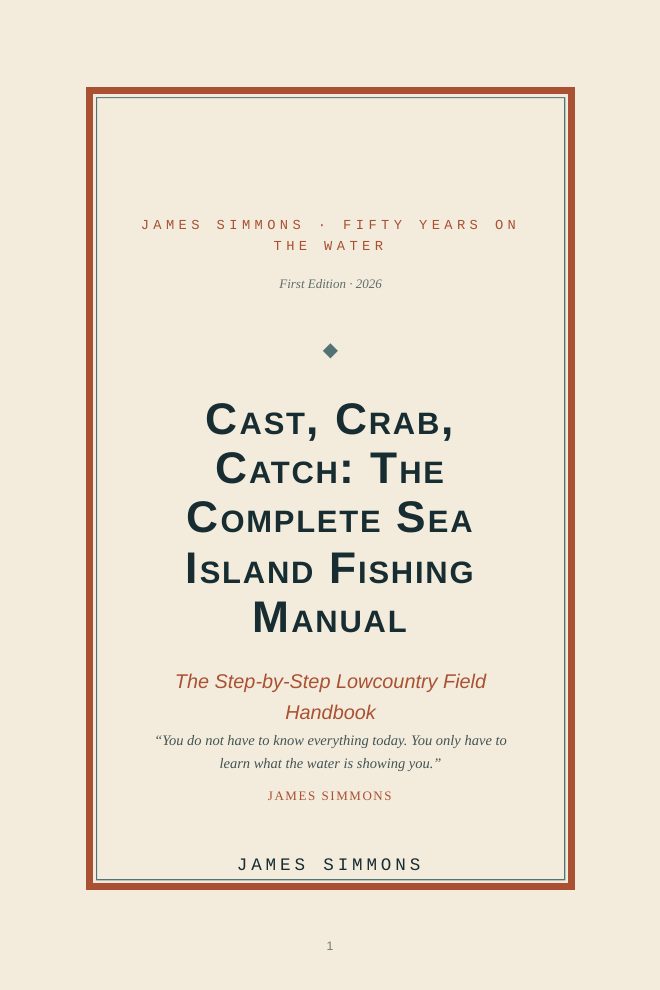
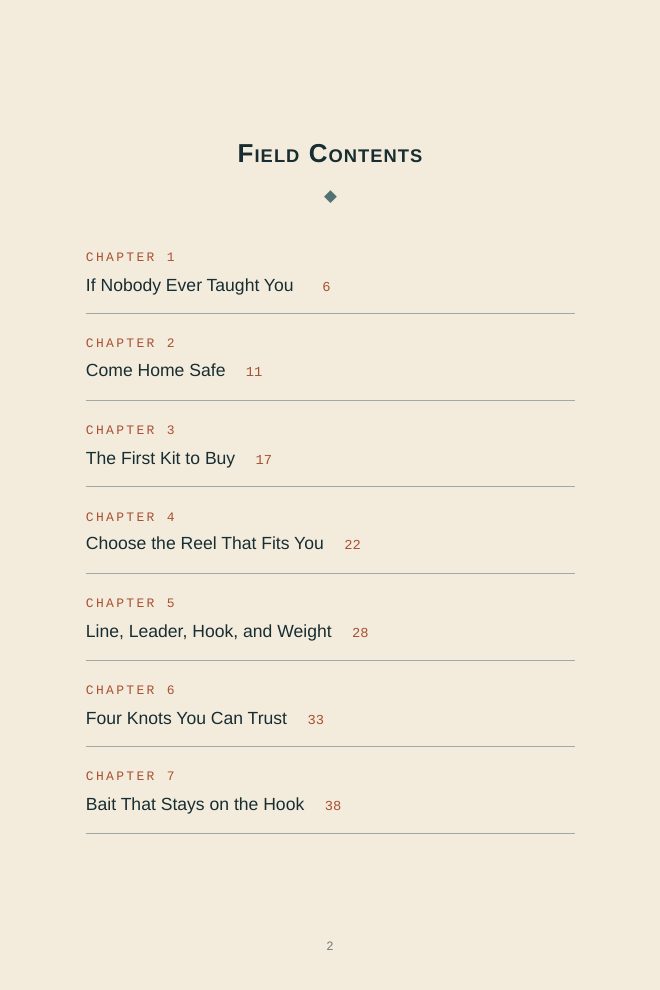
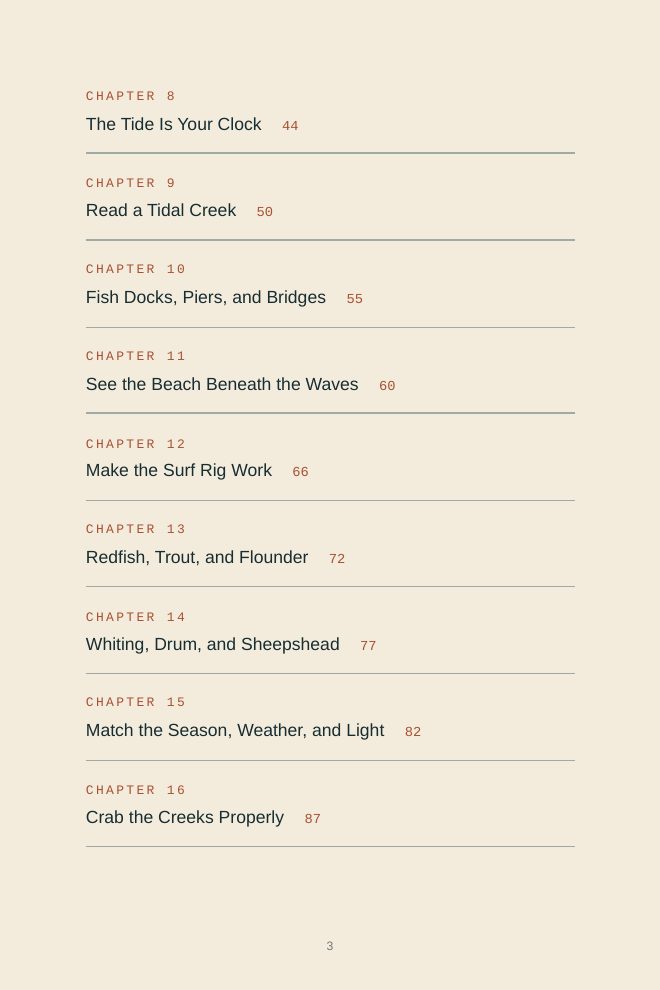
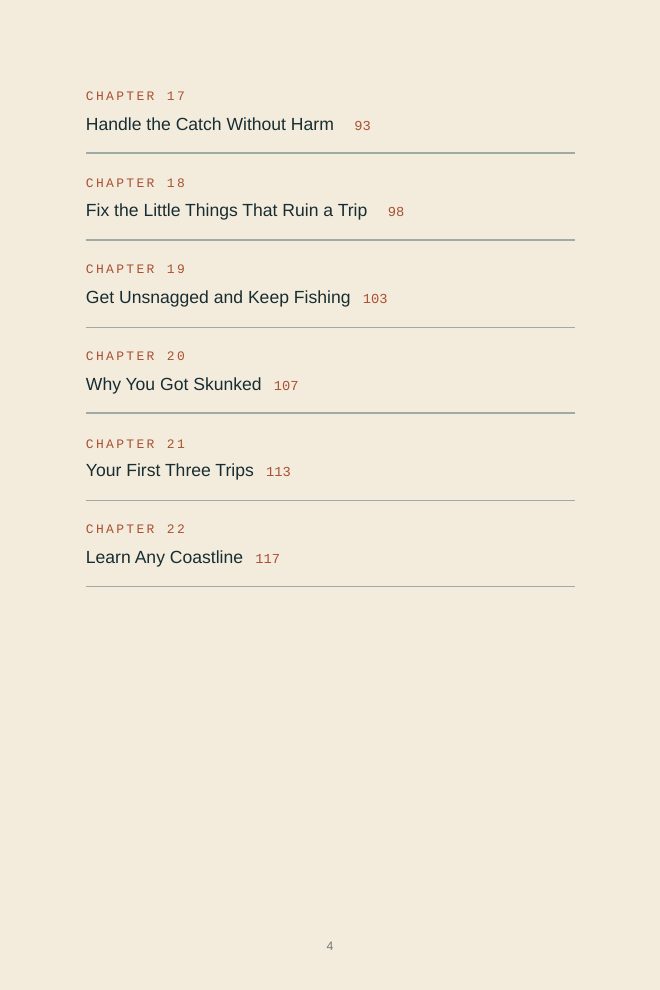
The chapters move from your first safe outing and starter kit to tides, structure, species, troubleshooting, crabbing, and continued practice.
Use a decision-free starter list for bank, dock, and light-surf fishing, with clear dollar ranges separating essentials from upgrades that can wait.
Get direct guidance on spinning, spincast, and baitcasting reels, including reel size, drag, line capacity, spool filling, and backlash recovery.
Match line, leader, hook, swivel, and sinker choices to common Lowcountry depth and current conditions instead of assembling a rig by trial and error.
Follow a compact knot system, run a pull test, spot crossing or heat damage, and correct common problems with slippery braid.
Prepare shrimp, fiddler crabs, mud minnows, mullet, squid, clams, and cut bait according to durability, target, cost, and current.
Recognize rising, falling, high, low, and slack water, read a tide table, account for local offsets, and select a focused two-hour window.
Read bends, outside banks, shelves, drains, oyster points, mouths, seams, eddies, and undercut edges—then decide where to stand and land the bait.
Approach pilings, shade lines, cross-braces, lights, corners, and bridge current with safer angles, sensible sinker ranges, and better structure control.
Use foam, wave shape, water color, rip flow, birds, and exposed sand to find troughs, cuts, points, and bars—and avoid empty casting lanes.
Start with practical leader lengths, hook sizes, bait portions, rod angles, and sinker weights, then adjust when current moves the rig.
Connect redfish, trout, flounder, whiting, drum, and sheepshead to habitat, tide position, bait, lure choice, retrieve, and hook-setting behavior.
Learn hand lines, collapsible traps, bait, placement, soak time, handling, sex identification, measurement, storage, and rule-checking habits.
Use wet hands, landing nets, dehooking methods, release decisions, revival, humane dispatch, icing, and cooler organization appropriately.
Correct wind knots, line twist, loose drag, slipping knots, lost bait, dull hooks, tangled rigs, damaged leaders, bad spooling, and stubborn snags.
Check tide, location, casting lane, depth, bait condition, hook exposure, sinker hold, leader damage, noise, and presentation one variable at a time.
Use a beach plan, public dock or pier plan, and tidal-creek bank plan, followed by a thirty-day practice routine that turns reading into water time.
Instant PDF delivery after purchase.

I am James Simmons, known in my community as Cylynt. I am 63, a South Carolina fisherman, and part of the Gullah Geechee community whose family roots run through the Sea Islands and Lowcountry.
I grew up around fishing, shrimping, crabbing, family land, tidal creeks, and knowledge carried by grandparents and elders. A lot of what people knew was taught while working, gathering, worshipping, cooking, or standing beside the water. It was not always written in a form a beginner could take home and study.
I have fished Lowcountry water for more than 50 years. I also wrote The Lowcountry Fishing Bible, built around 101 practical fishing habits. This manual goes further by organizing the equipment, water reading, casting, safety, crabbing, species, and troubleshooting into one step-by-step field handbook.
“I wrote this for the grown beginner, the returning fisher trying to remember what a grandparent once showed them, and the person who is tired of being told to just throw a line and hope.”
Preserving knowledge matters. So does preserving the land, water, family traditions, and Gullah Geechee communities that carried that knowledge forward. This book is one way to put practical instruction into the reader’s hands without pretending the water owes any of us a catch.
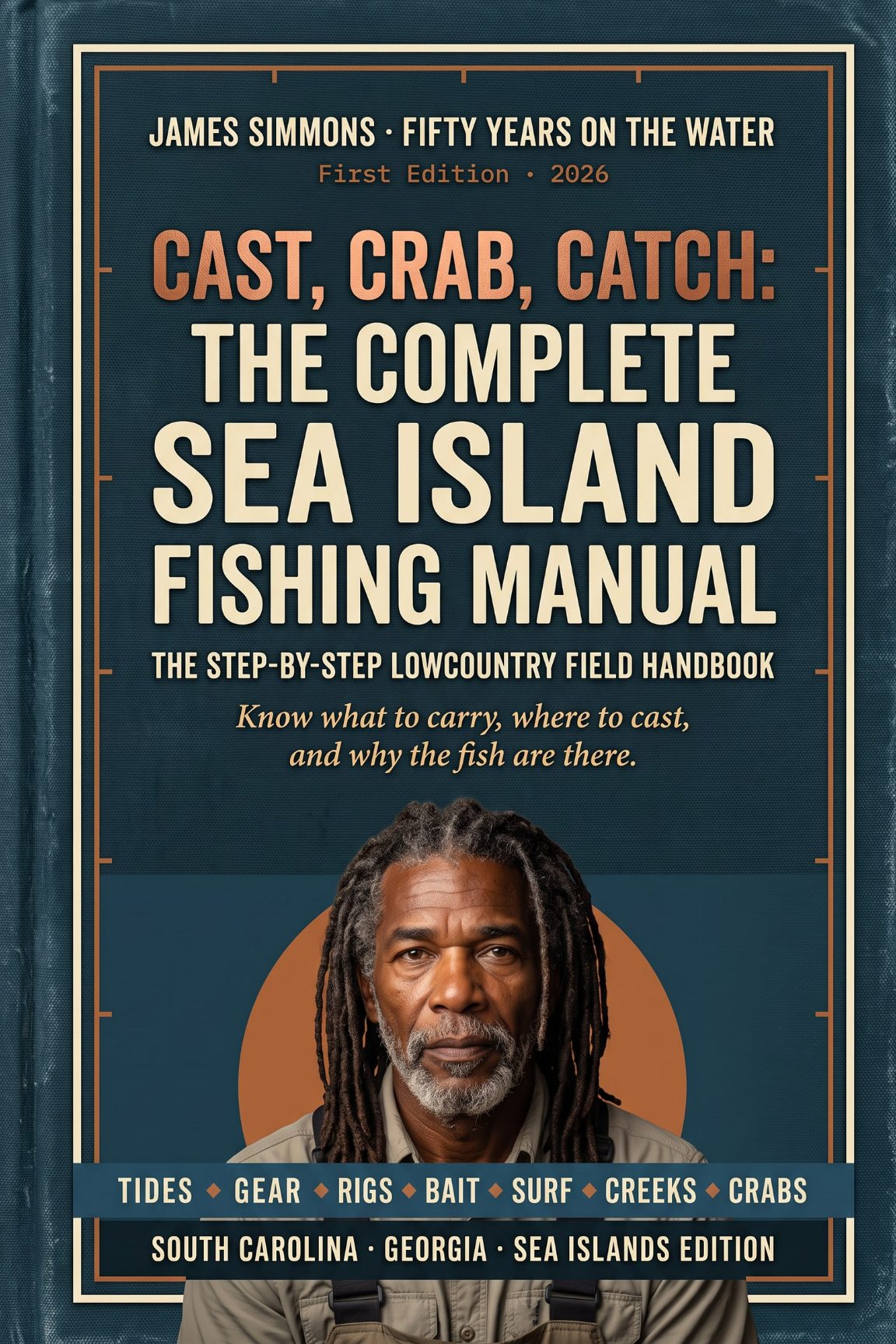
Cast, Crab, Catch: The Complete Sea Island Fishing Manual is a 121-page PDF designed for reading on your phone, tablet, or computer—and for printing when you want a copy in your gear bag.
Fishing advice is often delivered in pieces. One person recommends a rod. Another names a bait. A video shows a knot but never explains when to use it. A tide chart gives numbers without showing what those numbers should change about your trip.
Cast, Crab, Catch was created to connect those pieces. It begins before the bait touches the water: checking weather and rules, choosing a safer place to stand, carrying the right essentials, and understanding what the tide is doing.
From there, it follows the same sequence you face during a real outing. Build the rig. Keep bait attached. Find structure. Choose the casting lane. Let the current work. Notice the bite. Handle the fish or crab responsibly. Repair what failed. Record what you learned.
James Simmons wrote these lessons down after more than five decades of fishing Lowcountry water and learning in a Gullah Geechee family and community where knowledge has long been carried through observation, work, and spoken instruction.
Check safety, rules, tide, equipment, bait, and your basic plan.
Read structure, select a lane, present the bait, and make one useful adjustment.
Fix the gear, review the conditions, and carry one lesson into the next trip.
It is not a promise of guaranteed fish, a replacement for current regulations, or a shortcut around practice. It will suit the beginner, the returning fisher, and the careful learner willing to observe the water and adjust one thing at a time.
Use it on your device or print the pages you want beside the water.
No. The opening chapters speak directly to adult beginners and returning fishers. The manual starts with observation, safety, a first kit, basic reel choices, terminal tackle, and four knots before moving into tides, casting lanes, species, and troubleshooting.
No. The starter-kit chapter separates true essentials from later upgrades and gives practical dollar ranges. The purpose is to help you begin with one useful setup rather than buying several rods, reels, rigs, and tools before you know what you need.
No. The manual is especially useful for bank, dock, pier, bridge, tidal-creek, beach, and light-surf fishing. It includes guidance on where to stand, where to cast, and how to work around current, structure, depth, oysters, pilings, troughs, bars, drains, and shore access.
The book teaches you to check current South Carolina or Georgia licenses, seasons, size limits, harvest limits, trap rules, species identification, and local access requirements before every trip. Regulations can change, so the manual does not present itself as a permanent legal substitute for the current official rules.
No honest fishing manual can guarantee a catch. Weather, tide, access, fish movement, water clarity, bait, and local conditions all change. The book is designed to improve your decisions, help you notice why a presentation may not be working, and give you a repeatable way to learn from each trip.
You receive instant access to the 121-page PDF. You can read it on compatible devices or print a copy for personal use. Your purchase also includes free lifetime updates and a 7-day refund period.
Your purchase includes a 7-day refund period. If the manual is not the clear, practical beginner and returning-fisher guide you expected, request a refund within that period.
No fishing book can guarantee what the tide or fish will do. This guarantee is about giving you time to judge the quality and usefulness of the manual itself.
Instant PDF access and free lifetime updates are included.
You do not have to know every knot, own every lure, or recognize every change in the water before you begin. You need a dependable starting point and a way to learn from what happens next.
Cast, Crab, Catch gives you that starting point across 121 pages and 22 practical chapters.
Read it anywhere. Print it for your gear bag. Keep every future update at no additional charge.
Get the complete 121-page manual, all 22 practical chapters, instant PDF access, lifetime updates, and a 7-day refund period.
Get Cast, Crab, Catch for $23For beginners, returning fishers, bank anglers, dock fishers, light-surf anglers, and responsible Lowcountry crabbers.